Improve preparedness during renovations
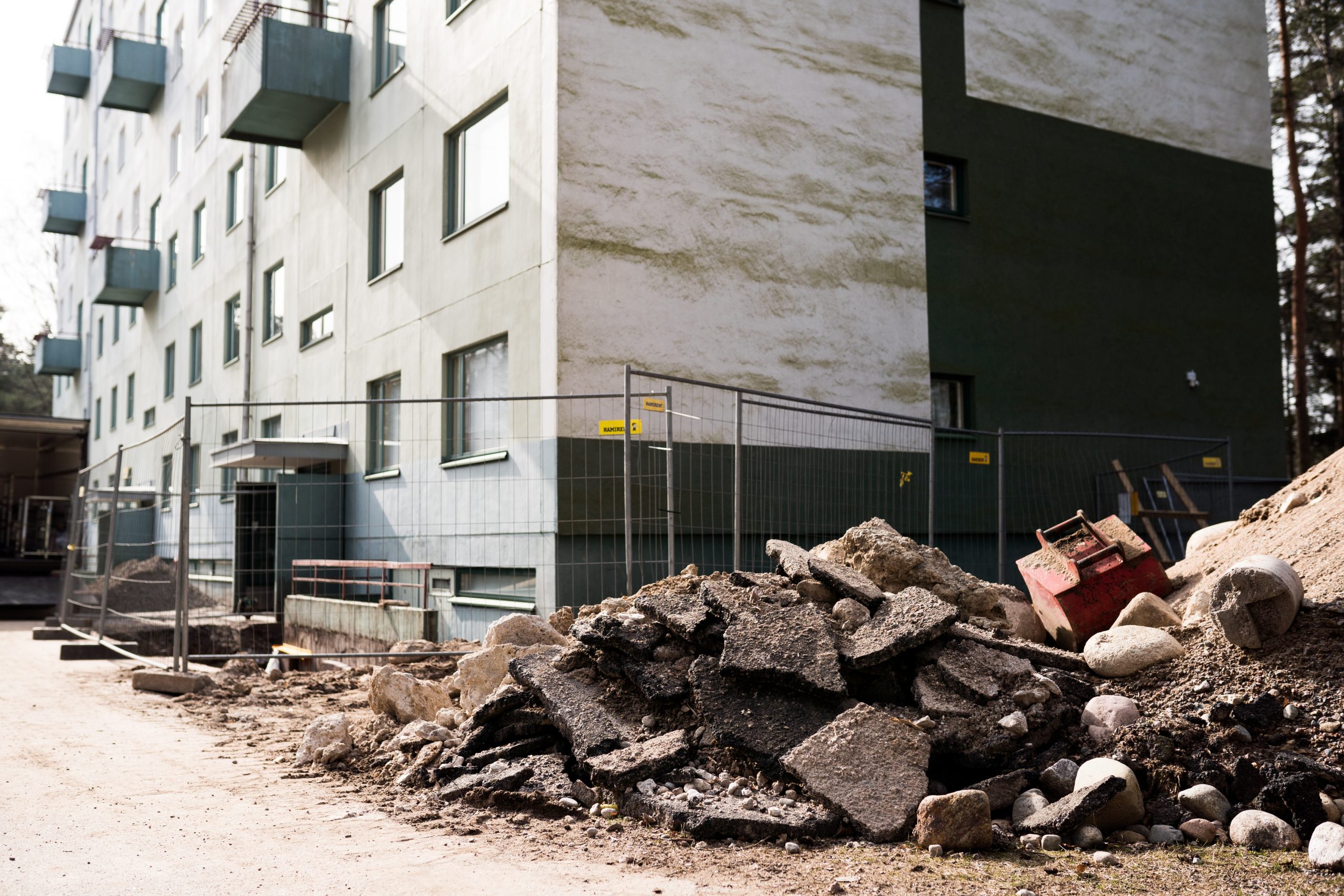
Preparing for extreme weather events in renovation projects
Almost all repairs carried out in a housing company also affect the durability of the building. This page offers you measures to mitigate the stress caused by extreme weather events that you can apply in connection with renovation projects.
A housing company’s key measures vary from property to property, however. Identify the relevant risks and precautionary measures for your housing company by commissioning a risk assessment in connection with a condition assessment. Preparing for extreme weather events helps a housing company reduce risks, avoid costs and support the health and safety of its residents. Read more about doing a risk review for your housing company in the section What should your housing companies do? Companies that carry out risk assessments and implement the measures recommended below can be found on our list of service providers (in Finnish).
Browse preparedness measures
The preparedness measures have been listed under different repair projects.
- Increasing the capacity of the stormwater system
- Greener yard: cooling and stormwater management
- Cooling system (air-source heat pumps, district cooling, geothermal cooling)
- Installing a drainage pump in a property with a high flood risk
- Moisture-resistant and breathable soil-adjacent structures
- Smart heat and ventilation control.
- Greening the yard in connection with building energy wells: cooling and stormwater management
- Cooling system (air-source heat pumps, district cooling, geothermal cooling)
- Solar panels, e.g. electricity for a cooling system
- Smart heat and ventilation control.
- Smart ventilation control
- Ventilation renovation with an external module, including cooling
- Installation of a dehumidifier.
- Checking the time control of anti-freeze systems
- Increasing the capacity of the stormwater system
- Adding greenery to the yard
- Improving the yard’s water permeability
- Water-retaining green structures and paving types
- Terrain forms that help guide stormwater
- Caring for trees and planting seedlings
- Allotment, benches from decaying wood, fences made with brushwood
- Construction of floodwalls and floodplains
- Improving the management of gravitational water
- Improving the erosion resistance of sloped areas
- Installation of rat-proof lidded waste containers
- Accessible yard areas.
- Alarms (e.g. water leakage or fire)
- Automatic fire extinguishing system (high fire risk areas)
- Checking the anti-freeze system or its time control
- Smart heat and ventilation control.
- Additional insulation for the attic
- Installation of a green roof
- Widening of eaves and fire blocks
- Increasing the capacity of the stormwater system
- Cleaning rainwater pipes and gutters
- Improving the breathability of structures
- Materials and structures resistant to moisture load
- Materials and structures resistant to the thermal movements and uneven temperature distribution of extreme weather events
- Surface materials reflecting thermal radiation
- Checking the anti-freeze system.
- Additional insulation
- Improving the breathability of structures (e.g. adding a ventilation gap)
- Glazing and solar shading of balconies
- Caring for trees and planting seedlings
- Ensuring the watertightness of window and façade joints
- Moisture-resistant and breathable soil-adjacent structures
- Cleaning and maintenance of rainwater pipes and gutters
- Materials and structures resistant to moisture load
- Materials and structures resistant to the thermal movements and uneven temperature distribution of extreme weather events
- Surface materials reflecting thermal radiation
- Checking the anti-freeze system.
- Windows and doors that reduce thermal radiation: low g-value (transmittance)
- Window renovation and sealing
- Checking or installing supply air valves
- Sun protection for windows: shades, curtains, blinds, sunscreens, etc.
- Sun blocking windows or coating with sun blocking films
- Ensuring the watertightness of window and façade joints
- Inspecting the condition of the plinth, adding extra insulation, adding frost insulation
- Increasing the capacity of the stormwater system
- Defrosting of chutes and gutters
- Terrain forms that help guide stormwater
- Adding greenery to the yard
- Improving the yard’s water permeability
- Water-retaining green structures and paving types
- Caring for trees and planting seedlings
- Construction of floodwalls and floodplains
- Improving the management of gravitational water
In addition to the measures listed above, you can improve the sustainability of your housing company by following these steps:
- Try to save as much of the plot’s tree cover as possible, and ensure that the plot has a diverse range of trees of different ages that help absorb water into the soil and shade the house in summer.
- Prioritise paving types that are water permeable and slow down the flow of water.
- Check the façade structures during renovations and assess whether their ventilation and drying process is efficient enough, even with increased humidity.
- Properly secure loose parts of the building in case of storms.
- Place the critical functions of the building in a safe place in the building. For example, avoid putting all building services system in a basement space that has been identified as prone to flooding.
- In densely built environments, build fire blocks at property lines and building junctions.
Some preparedness measures also combat noise. See the residential buildings’ guide to noise abatement (in Finnish)
Download the list for yourself
You can also download this list of preparedness measures to consider in connection with renovation projects in PDF format below:
The list is based on the guide published by theFinnish Real Estate Federation, Vaikeutuviin sääolosuhteisiin ja sään ääri-ilmiöihin varautuminen taloyhtiössä – Opas taloyhtiön hallituksille, osakkaille ja isännöitsijöille (‘Preparing for challenging weather conditions and extreme weather events in housing companies – a guide for housing company boards, shareholders and property managers’). The original publication is available in Finnish on the website of the Finnish Real Estate Federation.