Warning by a specialist: Overcooling a home can have dire consequences – “Moisture can condense in the wrong spot”
Keeping too cool can put a strain on your respiratory tract. Image: Jussi Rekiaro
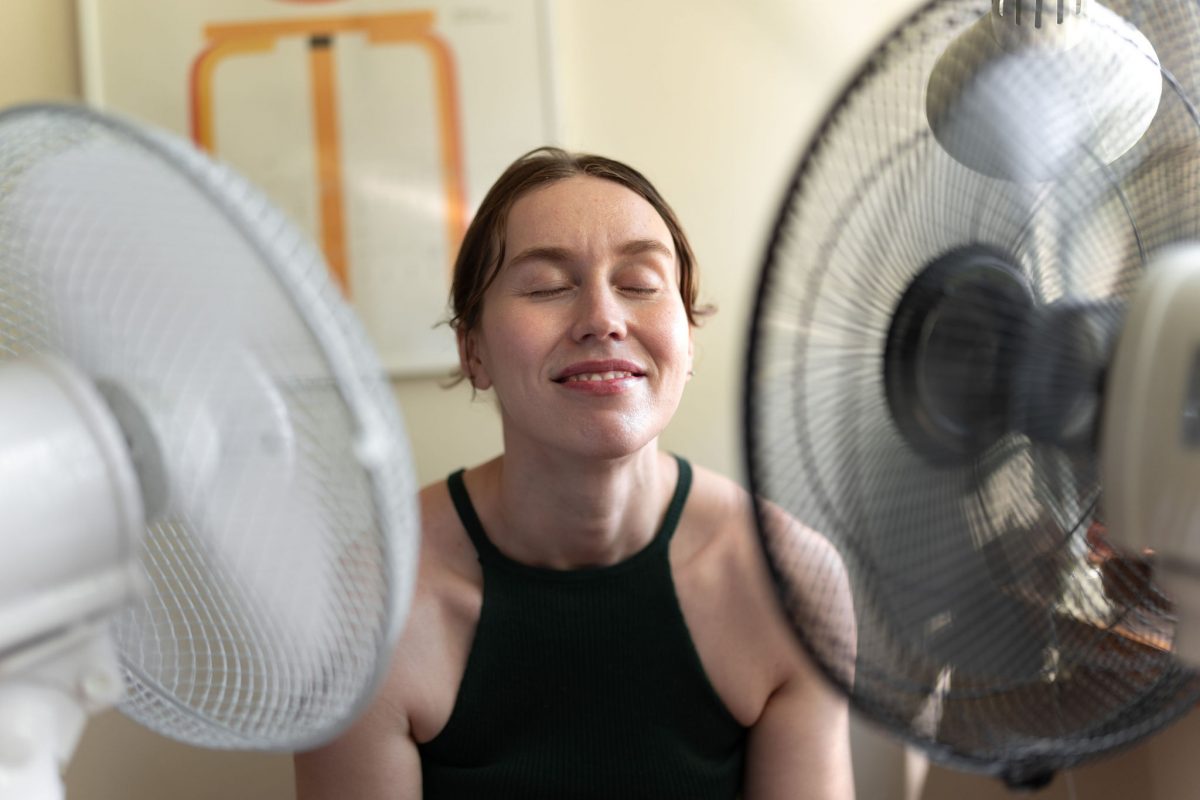
Heatwaves are becoming more intense in Finland too, and many people in both apartment buildings and detached houses are turning to various cooling devices for help.
These are great tools – but too much cooling can have dire consequences, warns Aleksi Heikkilä, team manager of the City of Helsinki Energy Advisory..
Prolonged excessive cooling can actually make humidity condense in places where it is not wanted, such as in the wall structures of the home. This is bad, as moisture is known to be a good breeding ground for mould.
“If it’s really hot and humid outside and really cool inside, moisture can condense in the wrong place,” Heikkilä explains.
According to Heikkilä, the risk is relatively small, but it will increase if overcooling a home continues for a long time. This causes the structures inside the walls to start to cool, and as we know, moisture condenses into water on cool surfaces.
“A few days may not be a problem, but one summer season of overcooling can lead to problems.”
Too cool feels cold
According to Heikkilä, there is no clear general guidelines on how cool indoor air should be in a hot weather. However, a good rule of thumb is that indoor air should not feel so cool that it becomes cold.
“Personally, I would keep the indoor temperature at around 23–24 degrees Celsius during a heatwave. That feels pretty nice, too, when it’s over 30 degrees outside,” says Heikkilä.
Cool it with the table fan
A table fan dug out in summer is a standard tool for lighter cooling in many homes. Although the fan doesn’t actually cool the air, the flow of air can feel nice on one’s face on a stuffy day.
However, the fan should not be on at all times, Heikkilä points out, and the fan should not be left on for the night to blow air directly into your face.
“This can put a strain on your respiratory tract and even cause muscle stiffness,” Heikkilä states.
However, you can use a table fan to try to improve night-time ventilation, as long as the temperature drops low enough during the night. This is particularly useful in new buildings with mechanical ventilation.
Windows closed in a hot weather
Because of the cooling effect of airflow, many people make the mistake of keeping a window or balcony door open on a hot day. However, this should not be done, and doors and windows should only be kept open when it’s cooler outside, usually at night.
Keeping them open during hot weather will only bring more hot air inside the home, according to Heikkilä.
According to Heikkilä, airing correctly and keeping blinds closed, for example, can already help control an apartment’s indoor temperature quite well.
“These passive cooling measures can, at best, achieve such a good result that no active measures are needed,” says Heikkilä.
Blinds incorrectly closed
Correctly closing the blinds is a topic that comes up every summer. Many people are surprised to learn that something as simple as this can be done wrong.
“The blinds should be closed with their convex side facing out,” Heikkilä says. “But it doesn’t really matter that much how they are closed, as long as they are closed.”
According to Heikkilä, shade is an essential part of passive cooling. The further away the blinds are from the interior of the home, the more effective they are in terms of cooling.
In Finnish homes, blinds are often located between or inside the windows. In southern Europe, on the other hand, it is typical for homes to have wooden shutters outside the windows.
According to Heikkilä, large trees are also effective for providing shade, and thereby good for keeping homes cooler. However, planting trees will not provide any quick relief.
“A tree will probably have to be allowed to grow for the next decade before it is ready to give any shade,” says Heikkilä.
Applies to new buildings, too
Heikkilä works as a team manager in the City of Helsinki’s energy advisory. Among other things, the energy advisory offers housing companies tips on how to adapt to climate change.
In his work, Heikkilä has noticed that excessive heat is not only a problem for old buildings – as people may commonly believe – but also for newer sites.
“If you have south-facing windows without any shade, heatwaves will hit newer buildings, too.
In addition to passive ways of cooling, there are also more drastic measures, such as geothermal cooling. However, Heikkilä’s message to housing associations is quite simple:
“Try the cheap and passive measures first.”
Text: Matti Tuomela, Mellakka Helsinki
Read more about the topic
Read about how to prepare for extreme weather events on the Sustainable Housing Association page.
Explore the coordination of energy and preparedness measures.