Is water leaking through your window frames? Remember the housing company’s responsibilities in maintenance
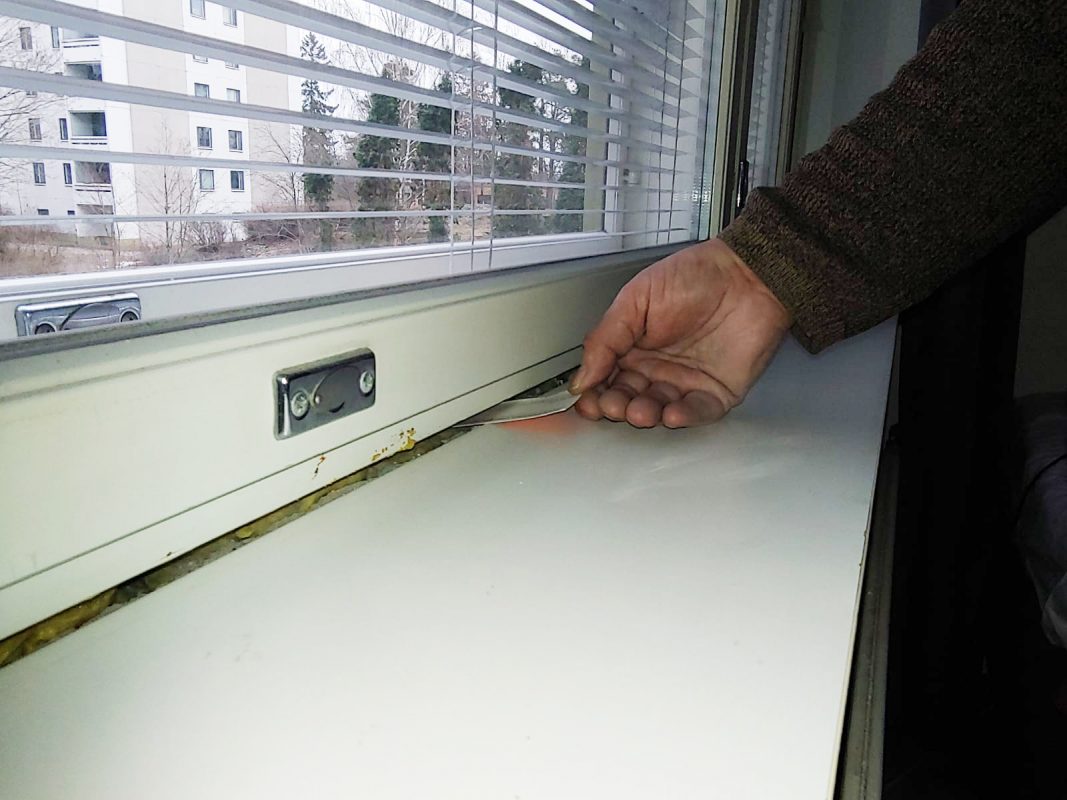
Water in the wrong place is never a pleasant surprise in a home. An unclear division of responsibility for the water damage makes the issue even more uncomfortable.
Water seeping in through window frames is one of the tricky cases when it comes to sharing responsibility, according to Anna Keskinen, a building physics specialist and team manager at the City of Helsinki.
In an apartment building, the outer frames and panes of windows are the responsibility of the housing company, while the inner and middle frames of windows, as well as the inner glass and the ventilation flap, are the responsibility of the shareholder.
When water comes in through the windows, the housing company can start arguing with the shareholder on whether they have kept the window frames on their side in good condition, Keskinen claims.
In principle, housing companies are obliged to check the window seals once a year, but Keskinen estimates that this is not the case in many of the companies, as property managers have a host of other responsibilities to manage.
slanted rain increases the risk of water damage
According to Keskinen, slanted rains have grown much more common over the past years, due to the warming climate, and the situation will only get worse.
As the name suggests, slanted rain is rain that falls at an angle or even horizontally in stormy weather, putting more stress on building façades than normal rain.
“Additionally, temperature fluctuations on both sides of zero is hard on the façade structures, as they thaw and freeze several timed during the winter,” Keskinen adds.
The detailed junctions of windows are a challenge in terms of both watertightness and energy efficiency, in both new and old buildings. If the structures have spots that are not quite watertight, water will find its way in, Keskinen warns.
“In case of slanted rain, wind pressure can even push water in a direction it would not normally go, such as upwards.”
Last winter was a nightmare for buildings
Keskinen describes the past winter as a nightmare for buildings. Temperatures have been constantly hovering between minus and plus degrees, with alternating rain and snow fall, and buildings could not really dry properly due to the humid weather.
Constant humidity is not good for buildings, as it contributes to the growth of microbes in structures.
Keskinen proposes that housing companies should, in general, be more prepared for climate change, and property managers should be given more training on the matter, for example. Finland’s climate is becoming more Central European in nature, and we should realise this ahead of time.
Preparing for climate change should be taken into account when planning façade renovations, for example. The City of Helsinki’s Building Control Services offer free and impartial advice on the subject, for example.
Text: Matti Tuomela, Mellakka Helsinki